
Scrotal Webbing Repair
Overview
Scrotal webbing, also known as a webbed penis or penoscrotal webbing, is a condition in which the skin of the scrotum extends higher than normal along the underside of the penis. Instead of a well-defined angle between the penile shaft and the scrotum, a fold of skin creates a "webbed" appearance.
The condition may be congenital (present at birth) or acquired, most commonly after surgery, trauma, or significant scarring. While some men have no symptoms, others experience cosmetic concerns, discomfort during sexual activity, or difficulty with certain physical activities.

What Is Scrotal Webbing?
Normally, the scrotum begins at the base of the penis, creating a clear separation between the penile shaft and scrotal skin.
With scrotal webbing, the scrotal skin extends farther along the underside of the penile shaft than usual, creating a web-like fold.
The degree of webbing varies considerably from one patient to another.
Scrotal webbing itself is not dangerous, but it may affect appearance, comfort, or sexual function in some individuals.
Causes of Scrotal Webbing
Scrotal webbing may occur for several reasons, including:
-
Congenital anatomical variation
-
Previous circumcision
-
Scar formation after surgery
-
Trauma
-
Inflammation
-
Healing following penile or scrotal procedures
A consultation allows the underlying cause to be identified and the most appropriate treatment discussed.
Who May Benefit From Treatment?
A consultation may be appropriate for men who:
-
Regularly ejaculate sooner than they or their partner would prefer
-
Feel unable to control or delay ejaculation
-
Experience frustration, embarrassment, or reduced sexual confidence
-
Avoid intimacy because of the problem
-
Have symptoms that developed recently or have been present for many years
-
Have tried behavioral techniques without satisfactory improvement
Patients with pain, urinary symptoms, erectile dysfunction, genital skin changes, or a sudden change in ejaculation should undergo a medical evaluation to identify possible underlying conditions.
Who Is a Candidate?
Scrotal webbing repair may be appropriate for patients who:
-
Are bothered by the cosmetic appearance
-
Experience discomfort during erections
-
Notice tension during sexual activity
-
Have recurrent skin irritation
-
Feel that the penis appears shorter because of the webbing
-
Have scarring after previous surgery
-
Wish to improve the definition of the penoscrotal angle
A physical examination helps determine whether surgery is appropriate and whether additional procedures may improve the overall result.
The Procedure
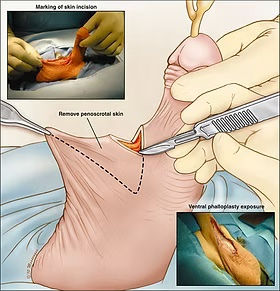
Scrotal webbing repair is an outpatient procedure that can usually be performed under local anesthesia with sedation or general anesthesia, depending on the extent of the correction.
During surgery, Dr. Danino:
-
Carefully evaluates the amount of excess webbing
-
Releases the abnormal skin attachment
-
Repositions the scrotal skin
-
Restores the natural penoscrotal angle
-
Removes excess skin when necessary
-
Closes the incisions with fine absorbable sutures
Several reconstructive techniques may be used depending on the severity of the webbing, including tissue rearrangement (such as Z-plasty or related flap techniques) to reduce tension and improve contour.
The procedure generally takes 45 to 90 minutes, and patients return home the same day.

Recovery
Recovery is generally straightforward.
Patients are advised to:
-
Wear supportive underwear
-
Keep the area clean and dry
-
Limit strenuous physical activity for approximately 2–3 weeks
-
Avoid sexual activity for approximately 4–6 weeks
-
Attend scheduled follow-up visits
Swelling, bruising, and mild discomfort are common during the first several weeks.
Most absorbable sutures dissolve naturally.
Scar maturation continues for several months.
Results
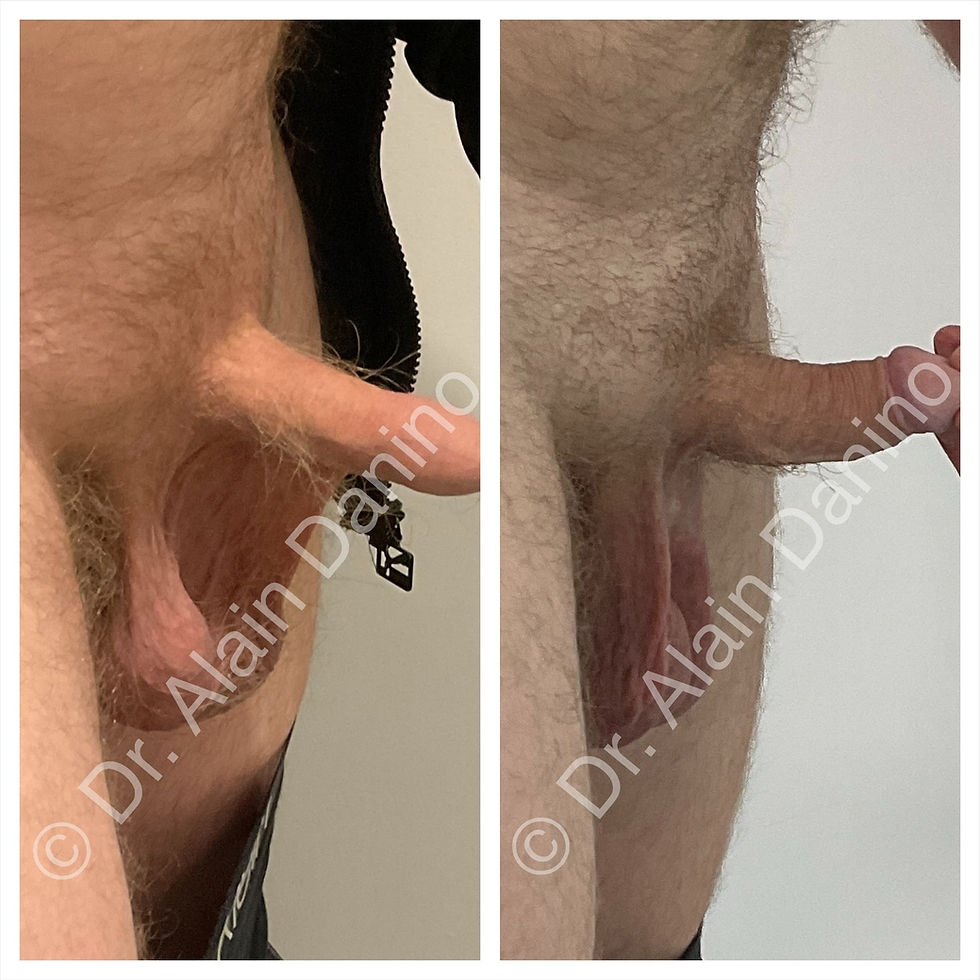
The goal of surgery is to restore a more natural transition between the penis and scrotum.
Following healing, patients commonly notice:
-
Improved definition of the penoscrotal angle
-
Reduced skin tension during erections
-
Improved comfort during sexual activity
-
Improved cosmetic appearance
-
Better proportional appearance of the penile shaft
Individual healing and final results vary from patient to patient.
Risks and Possible Complications
As with any surgical procedure, scrotal webbing repair carries potential risks, including:
-
Bleeding
-
Infection
-
Swelling
-
Bruising
-
Delayed wound healing
-
Temporary numbness
-
Scar irregularity
-
Mild asymmetry
-
Recurrence of webbing
-
Need for revision surgery
Dr. Danino reviews these risks in detail during your consultation.
Locations
Adress
4150 rue Sainte-Catherine Ouest
Suite 402 - 4e étage
Let’s Talk
info@mysite.com
Phone
514-845-9898