
Erectile Dysfunction Treatment
Overview
Erectile dysfunction (ED) is the persistent inability to achieve or maintain an erection sufficient for satisfactory sexual activity. It is a common condition that affects men of all ages, although it becomes more prevalent with advancing age. ED may result from vascular disease, diabetes, nerve injury, hormonal disorders, pelvic surgery, medications, psychological factors, or a combination of these causes.
Fortunately, many men respond well to lifestyle modifications, oral medications, injectable therapies, vacuum erection devices, or penile prostheses. For carefully selected patients whose erectile dysfunction is caused by injury to the nerves responsible for erection, microsurgical nerve reconstruction may offer an additional treatment option.

Understanding Erectile Dysfunction
An erection depends on healthy blood vessels, functional nerves, adequate hormone levels, and appropriate psychological stimulation.
Erectile dysfunction may develop when one or more of these systems are affected.
Common causes include:
-
Diabetes
-
High blood pressure
-
Cardiovascular disease
-
High cholesterol
-
Smoking
-
Pelvic surgery (including prostate surgery)
-
Pelvic trauma
-
Neurological disorders
-
Hormonal imbalance
-
Certain medications
-
Anxiety, depression, or stress
Determining the underlying cause is essential before selecting the most appropriate treatment.
Who May Be a Candidate?
A consultation may be appropriate for men who:
-
Cannot achieve or maintain erections consistently
-
Have not responded adequately to oral medications such as sildenafil (Viagra®) or tadalafil (Cialis®)
-
Have erectile dysfunction following pelvic surgery or trauma
-
Have evidence of nerve injury affecting erectile function
-
Wish to explore alternatives before considering a penile prosthesis
Not every patient is a candidate for nerve reconstruction. Careful evaluation is required to determine whether nerve damage is likely contributing to the erectile dysfunction.
Corpus Cavernosum Neurotization (Nerve Grafting)
For selected patients whose erectile dysfunction results from nerve injury, corpus cavernosum neurotization may be considered.
This microsurgical procedure aims to restore nerve signaling by creating new neural pathways between healthy donor nerves and the erectile tissue of the penis.
Unlike medications, which temporarily improve blood flow, neurotization attempts to encourage long-term nerve regeneration.
Because nerve regeneration is gradual, improvements typically develop over many months.
The Procedure

The operation is performed under general anesthesia.
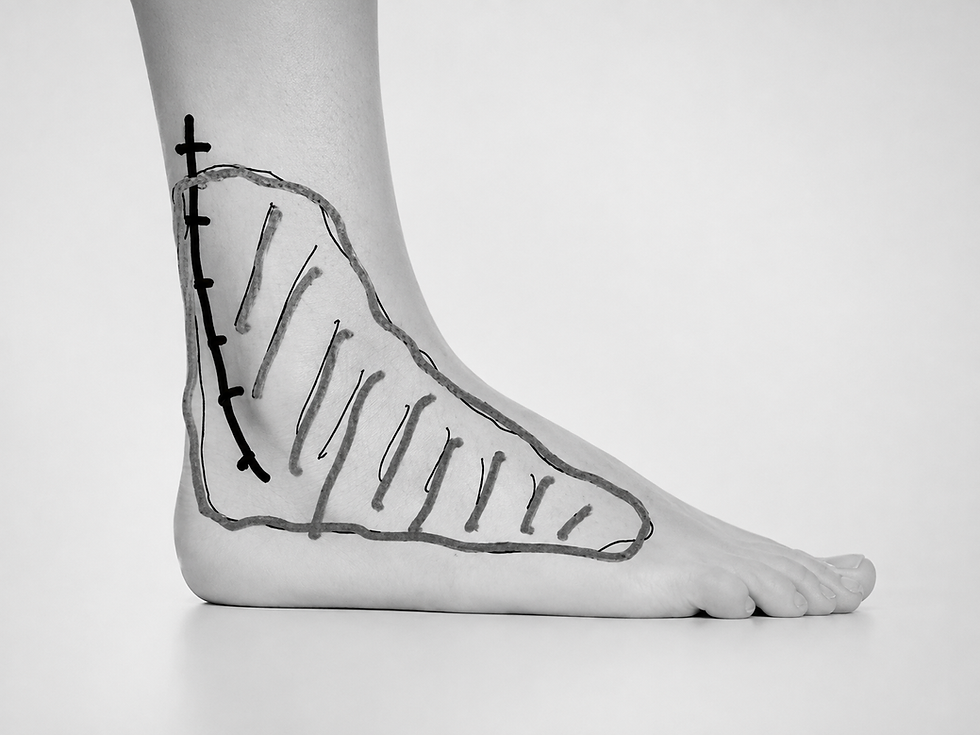
A sensory nerve from the lower leg (commonly the sural nerve) is harvested through a small incision. Harvesting this nerve typically results in permanent numbness along a portion of the outer foot or lower leg but does not affect leg strength or walking.
Through additional small incisions, healthy donor nerves are identified and connected to nerve grafts using advanced microsurgical techniques.
The nerve grafts are then inserted into the erectile tissue (corpora cavernosa), where they may promote new nerve growth over time.
The procedure generally requires several hours and is performed in an operating room using microsurgical instruments.
Recovery
Patients generally return home the same day or after a short hospital stay, depending on the extent of surgery.
Recovery recommendations typically include:
-
Walking shortly after surgery
-
Temporary activity restrictions
-
Keeping incisions clean and dry
-
Wearing supportive garments if recommended
-
Avoiding strenuous exercise for several weeks
-
Abstaining from sexual activity for approximately three months while nerve healing begins
Because nerves regenerate slowly, improvements may continue to develop for 12 months or longer after surgery.
Results
Recovery varies significantly between patients.
Successful nerve regeneration requires time, and improvement is gradual rather than immediate.
Some patients experience:
-
Improved spontaneous erections
-
Better response to oral medications
-
Improved erectile rigidity
-
Reduced dependence on injectable medications
Published experience with corpus cavernosum neurotization remains limited compared with established erectile dysfunction treatments. While early reports have shown encouraging results in selected patients, larger studies are needed to better define long-term outcomes, ideal candidates, and success rates.
Dr. Danino will discuss the expected benefits and limitations based on your individual condition.
Risks and Possible Complications
As with any microsurgical procedure, potential risks include:
-
Infection
-
Bleeding
-
Scarring
-
Temporary swelling
-
Persistent numbness along the donor nerve harvest site
-
Delayed nerve regeneration
-
Failure to improve erectile function
-
Need for additional treatment
-
Anesthetic complications
-
Rare nerve injury
Because nerve regeneration cannot be guaranteed, improvement in erectile function varies from patient to patient.
Locations
Adress
4150 rue Sainte-Catherine Ouest
Suite 402 - 4e étage
Let’s Talk
info@mysite.com
Phone
514-845-9898