
Penis Enlargement in Montreal: Anatomy, Surgery, and Modern Innovations

Introduction
Demand for penis enlargement surgery in Montreal has increased in recent years. This surgery may address various conditions, including aesthetic concerns, buried penis, complications related to obesity, or anatomical abnormalities.
Contrary to some information circulating on the internet, penile surgery requires a precise understanding of anatomy and strict medical indications.
Recent advances in reconstructive plastic surgery and anatomy have helped improve the safety of modern surgical techniques.
Penile Anatomy: Understanding Before Considering Surgery
The penis is not simply an external organ. A significant portion of its structure is located inside the pelvis, behind the pubic bone.
The penis consists of:
Two corpora cavernosa
One corpus spongiosum
The urethra
Vascular and nerve structures
A suspensory ligament system
Recent anatomical studies have shown that the penile suspensory system consists of four distinct ligaments:
Fundiform ligament
Suspensory ligament
Dense vertical ligament
Arcuate ligament

Penile Suspensory Ligament System
The penile ligaments provide stability and determine the orientation of the penis during an erection.
Two groups can be distinguished:
Non-Stabilizing Structures
Fundiform ligament
Suspensory ligament
Stabilizing Structures
Dense vertical ligament
Arcuate ligament
Ischiocavernosus muscles
Indications for Penile Surgery
Penile enlargement surgery may be considered in certain situations:
Buried Penis: A buried penis is a condition in which the penis is concealed within the suprapubic tissues.
Micropenis: A rare condition characterized by a penile length significantly below the average. The penis does not reach the testicles.

Consequences of Obesity or Weight Loss: Excess skin and fatty tissue can conceal the penis.
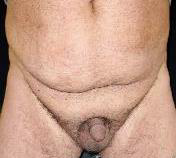
Modern surgical techniques are based on a combined approach.
Reduction of Suprapubic Fat
Liposuction or lipectomy allows greater exposure of the base of the penis.
Partial Ligament Release
Controlled release of the fundiform and suspensory ligaments can expose a portion of the internal penile shaft.
Suprapubic Suspension
Fixation of the suprapubic tissues helps prevent recurrence of the buried penis.
Penile Fat Grafting (Lipofilling)
Autologous fat grafting allows an increase in penile circumference and an improvement in overall proportions.
Clinical Results
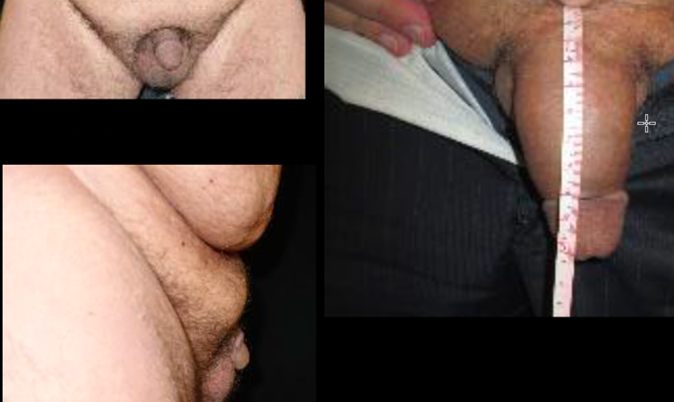
In certain clinical studies involving the treatment of buried penis, the following outcomes have been reported:
Average increase in flaccid penile length of approximately 4 cm
Average increase in penile circumference of approximately 80%
High patient satisfaction rates
Possible Complications
As with any surgical procedure, these techniques carry certain risks:
Prolonged swelling (edema)
Phimosis
Scarring
Granulomas associated with fat grafting
Conclusion
Penile enlargement is a complex surgical procedure requiring advanced anatomical knowledge and surgical expertise.
Recent advances in understanding the penile suspensory ligament system have contributed to improving the safety of modern surgical techniques.
The primary objectives remain:
Preserving sexual function
Maintaining erection stability
Ensuring patient safety
Scientific References
Danino MA, Dalfen J, Laurent R. Advocating for a Functional Nomenclature of the Penile Suspensory Ligament System. Aesthetic Surgery Journal.
Laurent R, Dalfen J, Trouilloud P, Benkhadra M, Danino MA. New surgical approach for buried penis with partial release of the penile suspensory system associated with fat transfer and suprapubic retraction. Annales de Chirurgie Plastique Esthétique.


Comments